Queen Creek / East Mesa Area Drainage Master Study and Plan Update
About The Study
The purpose of the Queen Creek/East Mesa Area Drainage Master Study/Plan Update is to re-identify and classify flood risk and flood-prone areas through advanced hydrology and hydraulic (H&H) modeling and flood risk analyses. The Study is a comprehensive update of previous work performed for the Queen Creek Area Drainage Master Study (ADMS) Update completed in 1991, a large portion of the East Maricopa County ADMS completed in 1987, and the East Mesa Area Drainage Master Plan (ADMP) completed in 2014.
STUDY OBJECTIVES
- The Study identifies and characterizes existing flooding sources and flood risk areas impacting the Study area.
- Accounts for recent land-use changes and drainage improvements within the watershed.
- Establishes flood control guidance for the promotion of public safety and flood risk reduction through identification of floodprone areas requiring flood mitigation, evaluation of past flood mitigation alternatives from the previous ADMS/ADMPs, and preparation of new flood mitigation recommendations and guidance.
Study Area Map
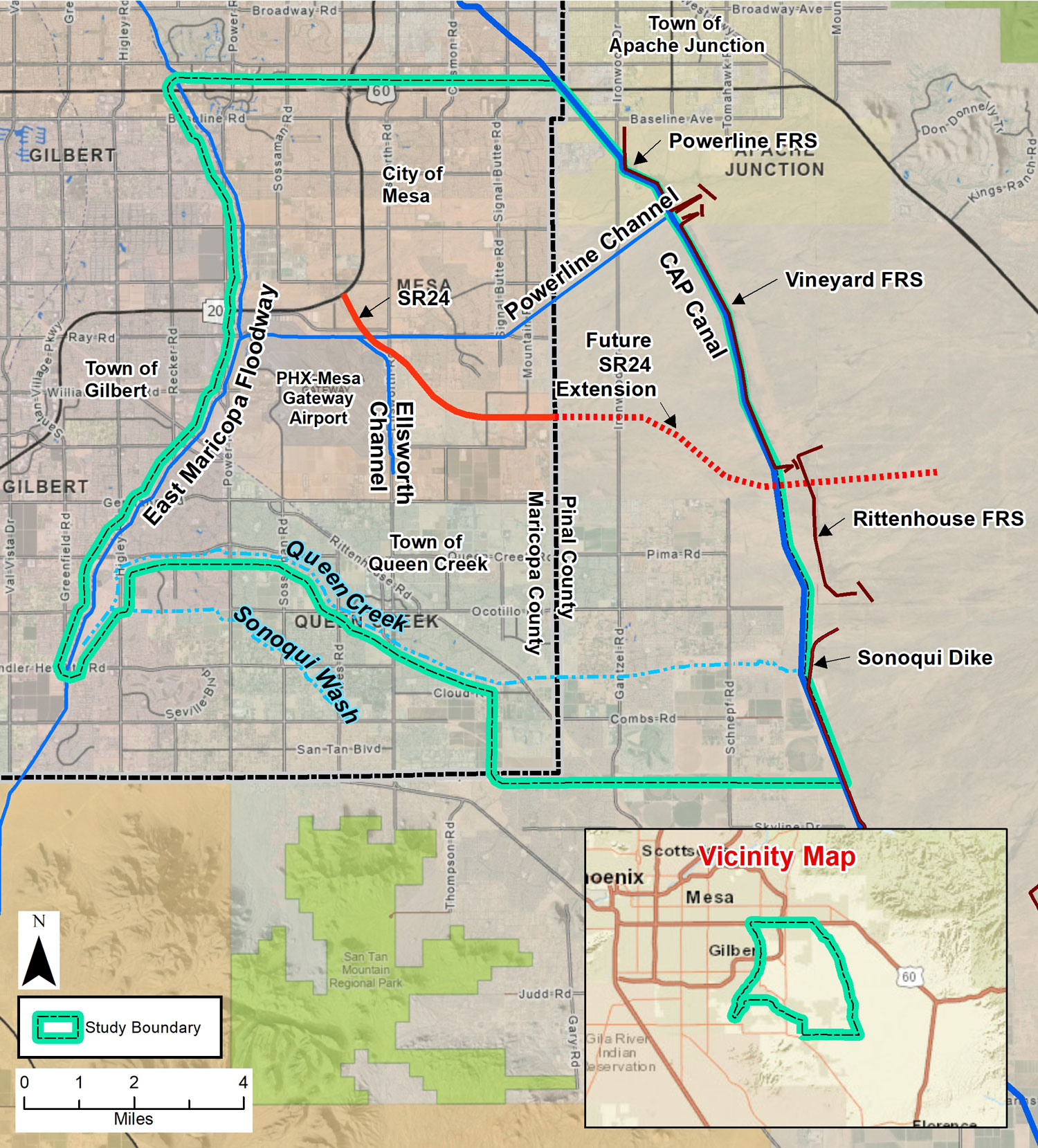
The 110-square-mile Study area is generally situated in Southeast Maricopa County and includes portions of the Cities of Mesa and Apache Junction, Towns of Gilbert, Queen Creek, and San Tan Valley, and Unincorporated Maricopa and Pinal County.
Project Timeline
Share Flooding & Draining Issues
Does your neighborhood flood when it rains? Your feedback, photos, and descriptions of what happens in the Queen Creek / East Mesa study area are useful as this plan develops.
Frequently Asked Questions
How will the updated flood hazard maps affect my property?
The flood hazard map completed during the study will not formally affect your property. The study results, including the map, are tools that the governing jurisdiction such as a city or town can use. They can decide to use it to update local regulations, plan for new development or build flood control infrastructure. Formal flood delineations can be requested by the local jurisdiction but are not a part of this current study.
If my property is reclassified into a higher flood risk zone, will I be required to purchase flood insurance? How will this affect my current insurance rates?
Formal flood delineations can be requested by the local jurisdiction but are not a part of this current study. If homeowners have a federally backed mortgage for a property in a FEMA-designated floodplain, the mortgage lender may require flood insurance. Homeowners can check to see if their property is in a floodplain on the Flood Control District’s floodplain viewer. The results of this study will not directly affect current insurance rates, but local jurisdictions could request more formal actions, such as a floodplain delineation study.
Are there any specific flood mitigation projects planned for my immediate area?
The results of this study will suggest projects for the local jurisdictions to consider adding to their own Capital Improvement Program or submitting to the Flood Control District for partnership.
What is the timeline for completing this study? How will I be notified about key milestones or when the study is complete?
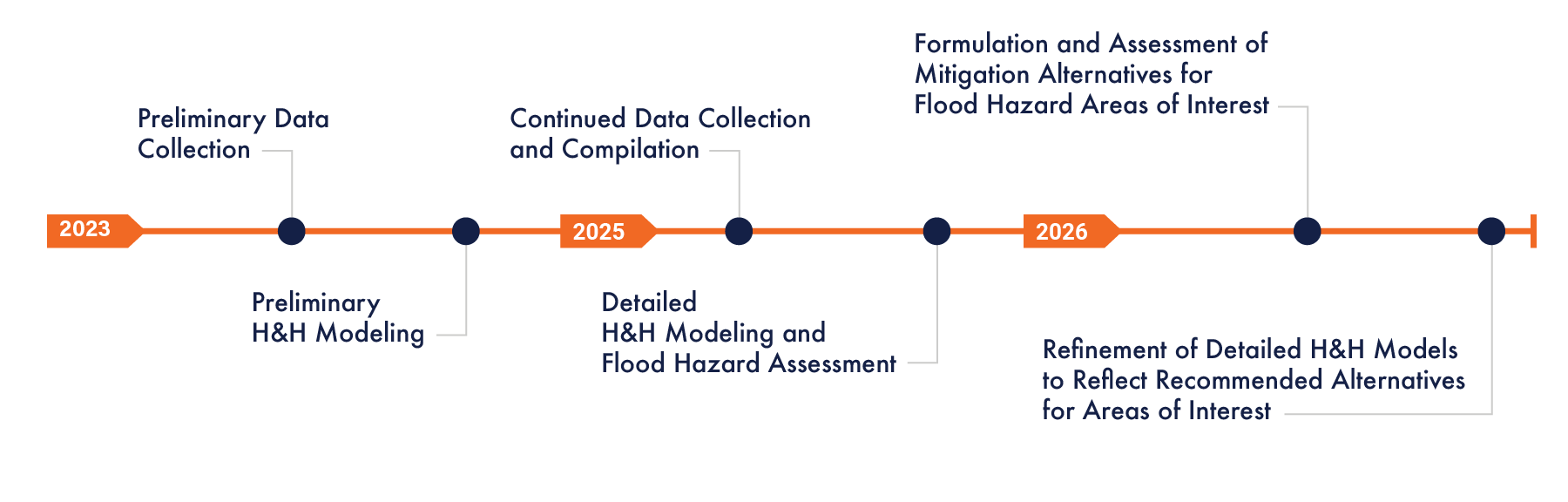
The study will be completed in late 2027. Residents can stay up to date on study milestones by subscribing to the email list.
How can I provide input or express concerns during the study process? Will there be public meetings or opportunities for feedback?
The study team is accepting historical information about flooding for model validation. Members of the public can submit that information on the project webpage.
How might the study's findings influence future development in the area? Will it affect zoning laws or new construction projects?
The results of this study can be used by local jurisdictions to inform future development in the area. There are no official actions directly taken by just the completion of the study.
What specific data is collected during an ADMS?
Staff during an Area Drainage Master Study use a variety of data and technologies to assess flood risks and develop effective flood management strategies.
Types of Data Collected:
- Topographic Data: Detailed elevation data to understand the terrain and how water flows across the landscape.
- Hydrologic Data: Information on rainfall patterns, runoff rates, and historical flood events to model how water behaves in different conditions.
- Hydraulic Data: Data on water flow and storage capacities of existing drainage systems, rivers, and other water bodies.
- Land Use and Development Data: Information on current and planned land use, zoning, and infrastructure which can affect flood risks.
- Flood Hazard Mapping: Detailed maps showing current floodplain boundaries and identifying areas at risk of flooding based on various scenarios.
- Soil Data: Information on soil types and their permeability, which affects how water is absorbed and flows through the ground.
- Existing Infrastructure: Data on current flood control infrastructure like levees, drainage systems, and detention basins.
What technologies are used?
- LiDAR (Light Detection and Ranging): LiDAR technology provides highly accurate topographic data by using laser scanning from aircraft or ground-based systems. This technology helps create detailed 3D models of the terrain, which are crucial for understanding flood risk and water flow patterns.
- Drones: Drones equipped with high-resolution cameras or LiDAR sensors can capture detailed aerial imagery and topographic data. They are particularly useful for surveying areas that are difficult to access or require frequent updates.
- Remote Sensing: Satellite imagery and aerial photography are used to gather data on land use, vegetation, and changes in the landscape over time. This information helps in updating flood hazard maps and understanding changes in flood risk.
- Hydrologic and Hydraulic Modeling Software: Advanced software is used to simulate flood scenarios, model water flow, and assess the effectiveness of potential flood mitigation measures. These models are based on the collected data and help predict how different factors will affect flood risks.
- Real-Time Data Collection: Sensors and monitoring stations can provide real-time data on rainfall, water levels, and flow rates. This information is valuable for updating models and responding to emerging flood conditions.
- Geographic Information Systems (GIS): GIS technology integrates various types of spatial data, allowing for detailed analysis and visualization of flood hazards, infrastructure, and land use. It helps in creating comprehensive maps and conducting spatial analysis.
- Hydrologic and Hydraulic Modeling Software: Advanced software (FLO-2D) is used to simulate flood scenarios.
Prepare for the Monsoon
Stay informed and stay safe during Monsoon! Maricopa County has a one-stop shop for everything Monsoon. Get daily weather outlooks, real-time rainfall maps and important safety tips for dust storms and flash floods. You’ll also find information on flooded roads, how to plan safer routes and what to do before, during and after a storm. It’s a simple way to stay prepared and protect yourself, your family and your home.
Stay Safe
Stay out of flooded areas
Never drive around barricades
Flooding Resources
Flood Control District of Maricopa County
Offers resources and guidance on what to do before, during, and after a flood.
Maricopa County Department of Emergency Management
Provides information on weather safety, including storm preparedness tips and how to stay safe during severe weather.
National Weather Service
Provides weather, water, and climate forecasts and warnings for hazardous conditions like severe thunderstorms, flooding, and storms.
American Red Cross
Provides disaster relief services, including financial assistance and recovery resources. They also offer help with temporary shelter and food.
Federal Emergency Management Agency
Provides extensive information on floodproofing, including guides on how to elevate your home, install sump pumps, and other flood protection measures. FEMA also offers disaster assistance for individuals and businesses affected by floods. This can include grants for temporary housing, home repairs, and other disaster-related expenses.
Centers of Disease Control and Prevention
After a flood, it’s important to ensure that your home is safe and sanitary. The Centers for Disease Control and Prevention (CDC) provides guidelines on how to clean and disinfect your home after a flood.
Coming Soon - Study Results
Stay tuned as we turn study results into actionable plans that aim to reduce flooding.